The U.S. housing market in 2025 is witnessing a peculiar trend: homeowners are increasingly pulling their properties off the market rather than lowering their asking prices. According to CBS News, in June 2025, for every 100 newly listed homes, 21 were delisted—a significant jump from 13 in May. This growing reluctance to negotiate prices signals a shift in seller behavior, reflecting a mix of confidence in home equity and frustration with sluggish demand. As the market evolves, sellers face a critical decision: hold firm or adapt. This blog explores why delistings are rising, current market trends, and actionable strategies for sellers to navigate this challenging landscape.

Why Sellers Are Holding Out
Several factors are driving homeowners to delist rather than reduce prices:
- Shrinking Sales, Rising Inventory: July 2025 saw a nearly 25% increase in homes for sale compared to the previous year, per CBS News. Despite this growing inventory, sales remain slow, creating a surplus that pressures sellers to either compete or retreat.
- Equity-Rich Mindset: Many homeowners, buoyed by significant price appreciation during the pandemic, feel financially secure and are willing to wait for better market conditions, as noted by News 9 and RealEstateNews.com. This confidence stems from substantial home equity gains, making delisting a low-risk move for some.
- Market Deadlock: An unwillingness to adjust prices to meet current demand is creating a standoff, prolonging market stagnation, according to CBS News and News 9. Sellers are holding out for offers closer to their expectations, even as buyers remain cautious.
- Regional Extremes: In high-cost markets like Miami, the delisting trend is stark. News 9 and Axios report that for every 100 new listings, 59 homes are delisted, with fewer than 18% of listings seeing price cuts. This suggests sellers in certain regions prefer to wait rather than compromise.
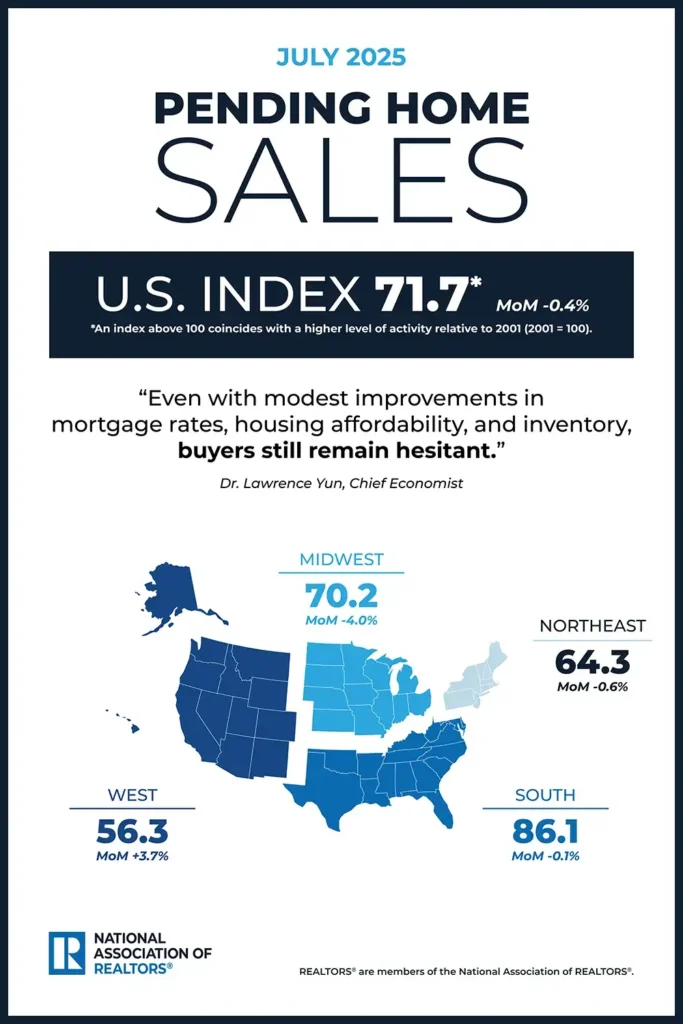
Current Market Trends – August 2025 Data
Delistings Across U.S. Regions
- Metro Denver: Axios reports a sharp rise in delistings, with many homes pulled compared to new listings. In June, 34% of listings in Denver had price reductions, indicating a more competitive market than in Miami.
- National and Regional Shifts: Nationally, the delisting rate rose from 13.6 per 100 new listings in May to as high as 27 in markets like Miami, per Axios. This reflects growing seller caution in response to softening demand.
Sales Momentum & Listings Data
- Pending Sales Decline: According to Realtor.com and NAR, pending home sales dropped slightly in July—0.4% and 0.7%, respectively—indicating hesitancy among buyers.
- Existing-Home Sales: The National Association of REALTORS® and Trading Economics note a 2.0% rise in existing-home sales in July, with gains in all regions except the Midwest. However, this uptick hasn’t fully offset the broader slowdown.
- New Home Sales Rebound: AInvest reports a 4.2% increase in new home sales in August, reaching an annualized rate of 685,000. Inventory for new homes dropped to a 6.5-month supply, with the average price rising 1.3% to $375,000.
- Mortgage Rates: AP News highlights a slight decline in mortgage rates, with the 30-year average at 6.56%, a 10-month low, offering some relief to buyers.
- Housing Wealth and Inventory: Investopedia notes that year-over-year home price growth slowed to 1.9% in June, below inflation. Inventory continues to grow, with 9.2 months for new homes and 4.6 months for existing homes, signaling a shift toward a buyer’s market.
What Sellers Can Do Instead of Delisting
Rather than pulling their homes off the market, sellers can adopt proactive strategies to stay competitive
Reassess and Reset Pricing Expectations
- Align with Current Market: Sellers should price homes based on 2025 market realities, not peak pandemic levels. Overpricing risks prolonged listing times and missed opportunities.
Embrace Creative Incentives
- Buyer Perks: Offering closing cost assistance, mortgage rate buydowns, or staging support can make a listing stand out without slashing the price.
Focus on Training & Strategic Selling
- Real Estate Consumer Training: Programs teaching pricing psychology, negotiation tactics, and market timing can help sellers make informed decisions. These programs empower homeowners to navigate complex market dynamics confidently.
Tip:Learn how to get expert in selling your home without price cuts.
Target Active Buyers
- Focus on Hot Markets: Areas like Phoenix, Las Vegas, and Charlotte are seeing rising new-home sales, per AInvest. Sellers in these regions can capitalize on demand by marketing to active buyers.
- Digital Channels: Since most buyers search online (Wikipedia), leveraging modern platforms like social media and real estate apps can boost visibility.
Use Data to Time Listings
- Monitor Trends: Realtor.com notes flat home prices over three weeks in August, suggesting a window for strategic listing. Sellers should track weekly housing data to time their moves effectively.
Consider Hybrid Options
- Temporary Rentals: For those hesitant to sell at current prices, renting out the property can generate income while waiting for better conditions—an “accidental landlord” approach.
Why Real Estate Consumer Training Programs Matter
Real estate consumer training programs are a game-changer for sellers in today’s market:
- Stay Informed: These programs teach the mechanics of price sensitivity, inventory cycles, and buyer behavior, helping sellers make data-driven decisions.
- Avoid Justice by Attrition: Delisting may seem like a safe bet, but it comes with costs—lost time, missed buyers, and ongoing carrying costs. Training highlights the benefits of staying engaged.
- Gain Confidence in Strategy: Professional training equips sellers with tools to interpret market trends, avoid common pitfalls, and secure better deals.

Final Words
Delisting a home might feel like a safe retreat, but it comes at a cost—lost opportunities and prolonged uncertainty. August 2025 data shows pockets of momentum, from rising new home sales to slightly lower mortgage rates, offering sellers a chance to pivot rather than pause. By resetting pricing expectations, offering creative incentives, leveraging training programs, and targeting active markets, sellers can stay competitive. Real estate consumer training empowers homeowners with the knowledge and tactics needed to navigate this evolving market and achieve success. Instead of stepping back, sellers should step up with informed, strategic moves.

